
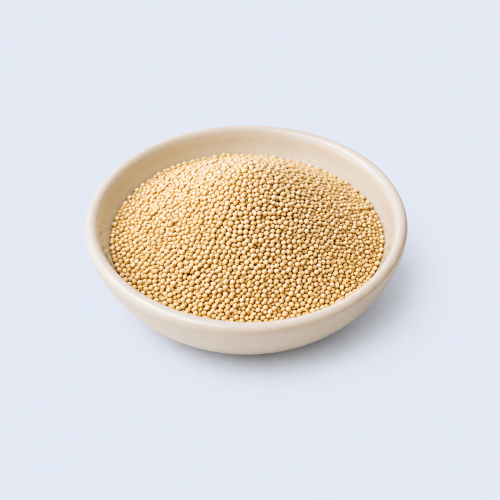
Quinoa (Chenopodium quinoa) is a pseudo-cereal increasingly used in premium pet food formulations as a functional carbohydrate and protein source. Unlike true cereals, quinoa is gluten-free by nature and offers a nutritional profile that supports its use in hypoallergenic, grain-alternative, and premium product lines. For manufacturers targeting the super-premium and functional segments, quinoa provides a formulation advantage that is difficult to replicate with conventional grains.
Nutritional composition
Quinoa contains approximately 12–16% crude protein, which is notably higher than most cereal grains such as rice or corn. More significantly, quinoa provides a complete amino acid profile, including all nine essential amino acids, with a particularly favorable lysine content — an amino acid typically limited in plant-based ingredients. This makes quinoa a valuable complementary protein source in formulations that combine animal and plant proteins, supporting overall amino acid balance without relying solely on animal-derived inputs.
In addition to protein, quinoa supplies complex carbohydrates with a moderate glycemic response, dietary fiber (approximately 6–7%), and a fat content of around 5–7%, which includes a favorable ratio of unsaturated fatty acids. It is also a source of micronutrients relevant to companion animal nutrition, including magnesium, iron, zinc, manganese, and B-vitamins, as well as naturally occurring antioxidants such as quercetin and kaempferol.
Functional and health-related properties
The gluten-free composition of quinoa makes it a suitable ingredient for formulations targeting animals with grain sensitivities or for brands positioning products as grain-alternative or limited-ingredient diets. Its fiber content contributes to digestive health and can support stool quality and gut transit time when included at appropriate inclusion rates.
Quinoa’s amino acid completeness and digestibility profile support its inclusion in life-stage and condition-specific formulations, including products developed for weight management, skin and coat support, and general maintenance diets where a plant-based protein complement is desired. Its low allergenic potential relative to common grain and animal protein allergens also supports its use in novel-ingredient or hypoallergenic product lines, where reducing exposure to previously used proteins is a formulation objective.
The natural saponin coating on raw quinoa seeds is removed through washing and processing prior to ingredient supply, ensuring the material is free of the bitter taste and anti-nutritional properties associated with unprocessed saponins. This is a standard and necessary processing step, and buyers should confirm saponin removal and residual saponin levels as part of their incoming quality specifications.
Formulation usability
Quinoa is supplied in whole seed, flaked, and milled (flour) forms, allowing flexibility across dry extrusion, baking, and wet or semi-moist formulation processes. Whole and flaked forms are commonly used in visible-inclusion premium kibble and baked treats, where the ingredient also serves a label and marketing function due to consumer recognition of quinoa as a “clean label” ingredient. Milled quinoa integrates more readily into extruded formulations where a homogenous matrix is required.
Quinoa performs well under standard extrusion temperatures and does not present significant processing constraints compared to conventional grains. Inclusion rates vary by formulation objective, typically ranging from single-digit percentages as a functional or label-supporting ingredient, up to higher inclusion levels in grain-alternative or quinoa-forward product lines.
Sourcing and origin
The quinoa supplied through our network is sourced from a farmers’ cooperative in China, where large-scale cultivation has developed significantly over the past decade, supported by growing agronomic expertise and expanding processing infrastructure. Working directly with a cooperative structure allows us to support local farming communities, ensure fair and stable terms for growers, and maintain closer oversight of cultivation practices from field to processing.
This sourcing model reflects our broader commitment to sustainable agriculture. By partnering with local farmers rather than sourcing through anonymous supply chains, we help preserve agricultural knowledge, support rural livelihoods, and encourage farming practices that protect soil health and biodiversity over the long term. For manufacturers building brands around responsible and transparent sourcing, this provides a verifiable and communicable origin story.
Chinese-origin quinoa also offers manufacturers a cost-competitive alternative to South American-origin material — historically the dominant source — while meeting the compositional and quality parameters required for pet food applications.
All material is subject to quality control covering protein content, moisture, saponin residue, foreign matter, and microbiological parameters, in line with the specifications required for premium and super-premium pet food manufacturing. Documentation, including certificates of analysis and, where required, additional certifications, is available to support incoming quality assurance processes.
Market positioning
Quinoa is well established in human food as a “superfood” ingredient, and this consumer familiarity carries directly into pet food purchasing decisions. Its inclusion on a pet food label supports premiumization strategies and resonates with pet owners seeking recognizable, functional ingredients for their animals. For manufacturers developing or expanding premium, grain-free, or functional product lines, quinoa offers both a formulation and a marketing rationale.
We supply quinoa in bulk quantities suited to industrial pet food production, with flexible contract terms based on expected volumes and delivery schedules. Product specifications, samples, and current pricing are available on request through our procurement team.